
There is one number the European Commission has repeated in every strategy since 2018: half. That is how much food waste must drop by 2030, per the Farm to Fork target. To understand what that target means, you first have to understand the number it is trying to cut: 59.2 million tonnes of food thrown away in the EU in a single year. The equivalent of 131 kilograms per European citizen, almost a dinner a day, every year, for every person on the continent.
Romania does worse than average. Per INS and Eurostat, we waste around 137 kg per person per year, putting us in the top third of the EU. This article is not about blame. It is about where the food is lost, because the right answer changes the entire discussion about solutions.
Where the food disappears, stage by stage
Eurostat publishes the distribution of losses across chain stages. The data below is for the EU-27 in 2022.
| Stage | Tonnes (M) | Share |
|---|---|---|
| Households | 31.9 | 53.8% |
| Food processing | 11.4 | 19.3% |
| Primary production (farm) | 5.3 | 9.0% |
| Retail & distribution | 5.3 | 9.0% |
| Food service (HoReCa) | 5.3 | 9.0% |
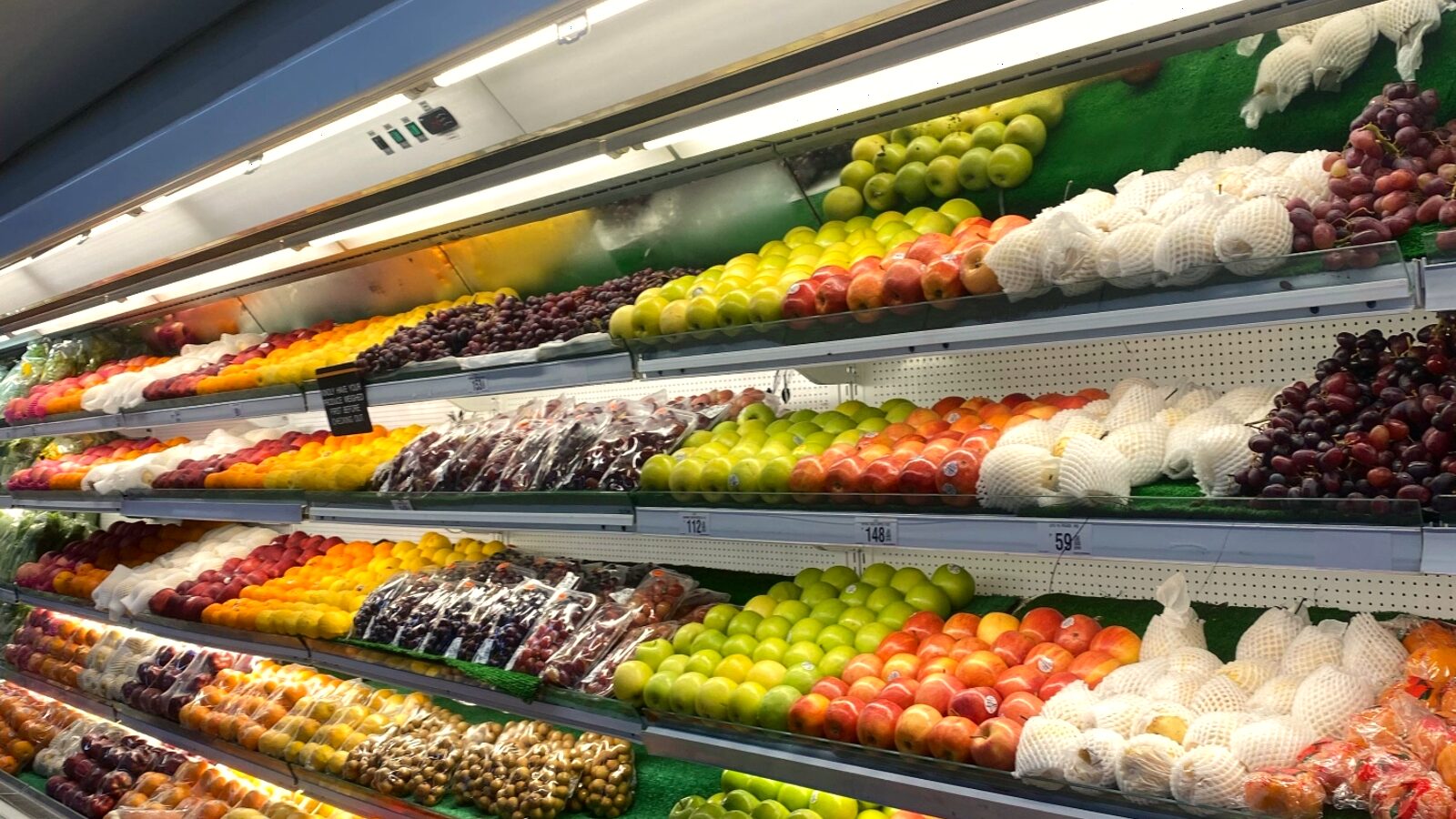
On paper, 54% of waste looks like consumer responsibility. The reality is that a meaningful share of what gets thrown away at home is, in fact, food that should not have arrived so close to its expiry date, already half-degraded at point of sale, in oversized packaging, or bought under the pressure of buy-one-get-one offers.
The cold chain: the big invisible problem
For fruit and vegetables, the category with the highest loss rates, the critical window is between harvest and shelf. Per FAO data and European cold-chain studies, every extra day between harvest and consumption increases losses by 1.5–3% for leafy produce, 0.8–1.5% for tomatoes and peppers, 0.3–0.8% for root vegetables.
| Chain | Days to consumer | Average loss |
|---|---|---|
| Classical long chain (large retail) | 7–14 days | 22–35% |
| Specialised distributor | 4–7 days | 12–18% |
| Regional short chain | 2–4 days | 5–9% |
| Direct online sales | 1–3 days | 2–5% |
This loss is not abstract. It is 1 in 4 cucumbers, 1 in 3 spinach bunches, 1 in 5 tomatoes that enter a warehouse but never make it into anyone's basket. The cost is absorbed, of course, into the shelf price, which you, the final buyer, pay.
Cosmetic standards: a political problem
In 2008 the EU officially repealed Regulation 1221/2008, which had banned the sale of 'non-uniform' fruit and vegetables. In practice, however, big retail chains kept enforcing their own aesthetic standards, stricter than the official ones. Per a 2021 Joint Research Centre report, around 30% of the fruit and vegetables discarded at retail level are thrown away purely for cosmetic flaws, irregular shape, undersized, slightly off-colour.
A crooked tomato has exactly the same nutritional value as a round one. The difference is that the first was deemed 'unsellable' by a central buyer in Düsseldorf, Geneva or Bucharest, and was thrown away before you ever had the chance to buy it.
Food service and households
Restaurants and catering account for 9% of waste, but per meal served the rate is disproportionately high: 21% of food prepared in European restaurants ends up in the bin, per a 2022 Wageningen University study. Buffets have the highest rate (35%), followed by corporate catering (18%) and à la carte restaurants (8%).
At home, the most-wasted categories are, in order: bread and bakery (28%), fresh vegetables (24%), fruit (16%), dairy (11%) and meat (8%). Bread is a particular cultural problem. Romanians waste roughly 250 grams of bread per person per week, per a 2023 IRES survey.
What a short chain actually changes
Eliminating or sharply shortening the processing, storage and retail stages removes around 60–70% of pre-consumer losses. Concretely:
- Produce is harvested at optimal ripeness (long-chain farms harvest 3–5 days early so produce survives transport).
- Days in refrigerated warehouses are eliminated; each one cuts shelf life by 1–3%.
- Imposed cosmetic standards disappear, farmers can sell 'ugly' produce at a discount.
- Overstocking goes away, direct sales work on order, not on shelf prediction.
- Single-use packaging shrinks, much produce ships in reusable crates, not individual plastic.
Why it matters: beyond the numbers
The direct cost of food waste is €132 billion a year in the EU. But the real cost, once you add CO2 emissions (148 million tonnes CO2-eq), water used to grow food that will never be eaten (5.8 billion m³), and farmland used in vain (16.4 million hectares), exceeds €280 billion per year, more than the entire CAP budget.
In other words: we spend public money to subsidise the production of food we then throw away. Reducing waste is not just an individual gesture of responsible consumption, it is a systemic problem whose solutions (short chains, on-demand sales, abolishing cosmetic standards) are known, but the infrastructure to apply them at scale is missing.
Methodology note
Macro figures are from Eurostat Food Waste Statistics 2022. Stage distribution follows the EU's common food-waste reporting methodology (Directive 2008/98/EC). Cold-chain and cumulative-loss data are synthesised from FAO's Food Loss and Waste Database and Wageningen University studies. Short-chain impact calculations use FAO standard conversion factors (1 t waste = 1.8 t CO2-eq).