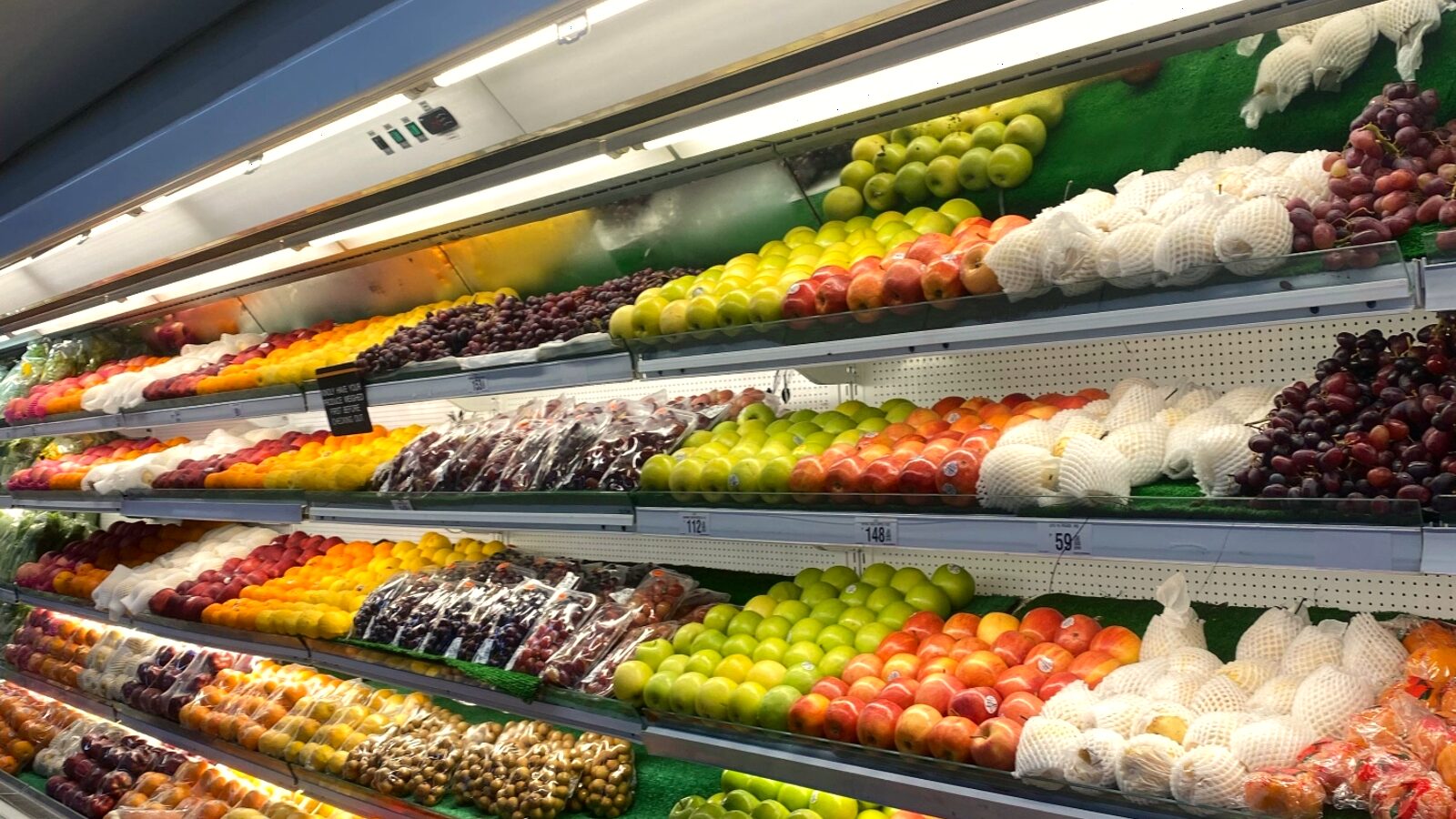
You walk through a Carrefour in Cluj. On the shelf, a basket of apples carries a big green label: 'Local Produce'. What should you assume, that the apples come from an orchard in the Apuseni mountains, 80 km away? From a farm in Bistrița, 200 km away? From a Bucharest warehouse that received goods from Poland repackaged under the chain's brand? The right answer is: you can't assume anything, because the label tells you nothing.
Unlike 'organic' (EU Regulation 2018/848), 'PDO' or 'PGI', the term 'local' has absolutely no legal definition in the European Union. Each retailer uses it as they wish, and the word has become one of the most abused in the entire modern food vocabulary.
What JRC research shows
The European Commission's Joint Research Centre published the foundational 2013 report on Short Food Supply Chains (SFSC), updated in 2023. The studies identified EU chains labelling 'local' produce that travelled over 800 km, i.e. the distance Bucharest–Berlin.
| Definition / actor | Max distance | Type |
|---|---|---|
| EU academic research (SFSC) | ≤75 km | Strict geographic |
| EU Commission working def. | Below national average | Relative |
| Artisanal producers | ≤30 km | Strict |
| Regional chain (German Bio-Regionalsiegel) | ≤100 km | Certified |
| Major retailers (self-declared) | Up to 800 km | Vague, unverifiable |
| E-commerce 'local producers' | Variable, unclear | Marketing |
Eurobarometer 2023 shows a huge gap: 78% of EU consumers consider 'local' important when buying food, but only 31% trust the on-shelf label. In other words: two out of three consumers think they are being lied to. And, per JRC research, they are.
Official definitions in different countries
In the absence of an EU definition, a few countries have started crafting their own rules. Comparing them shows how fragmented the landscape is.
| Country | Official or de-facto definition | Enforced by |
|---|---|---|
| France (Loi EGalim 2018) | Direct sales or max 1 intermediary | State (law) |
| Germany (Bio-Regionalsiegel) | ≤100 km, regional certification | Private associations |
| Italy (Filiera Corta) | Max 1 intermediary, in-region | Regions (Tuscany, Emilia) |
| Netherlands (Streekproducten) | ≤30 km, certification | Regional associations |
| Romania | None official | Free for all |
In France, the 2018 EGalim law forces retailers to include local products proportionally in state procurement (school canteens, hospitals, public administration). In Romania, there is no such obligation. The word 'local' can be put on any label, without verification, without recourse.
Food miles vs. carbon footprint
An important but often oversimplified debate is food miles vs. total carbon footprint. Studies show that for some products, local transport in small trucks consumes more energy per kilogram than mass transport on cargo ships from far away.
| Origin | Distance | Emissions (g CO2 / kg) |
|---|---|---|
| Local, in season, open field | ≤75 km | 85 |
| Local, in season, gas-heated greenhouse | ≤75 km | 1,940 |
| Spain, in season, open field, truck | 2,500 km | 320 |
| Netherlands, winter, heated greenhouse | 1,800 km | 2,890 |
| Morocco, winter, open field, truck | 3,200 km | 410 |
The nuanced conclusion: 'local' is almost always better for emissions when the product is in season and grown in open field or unheated greenhouse. But a Romanian tomato grown in a gas-heated greenhouse in winter has a higher carbon footprint than a Moroccan tomato trucked in. Seasonality matters almost as much as distance.
Traceability: the real answer
The solution is not a new legally enforced 'local' label, it would be hard to verify and easy to dodge. The solution is full transparency: the farm name, exact location, distance from the buyer, growing method. With this information visible, the word 'local' becomes unnecessary. The buyer sees the data and decides what 'local' means to them.
Why it matters: trust as infrastructure
Eurobarometer shows that in countries where short-chain traceability is high (France, Netherlands, Northern Italy), consumer trust in local food exceeds 60%. In countries where the long chain dominates without transparency (Romania, Bulgaria, Hungary), trust is below 35%. The difference is not character, it is infrastructure. And we are building that digital infrastructure now.
For the consumer, this means: in a world where words on labels mean less and less, the only real measure is direct access to facts. Who grew it, where, when, how. The rest is marketing.
Methodology note
Actor definitions come from the JRC report 'Short Food Supply Chains and Local Food Systems in the EU' (2013, updated 2023). Consumer trust data is from Eurobarometer Special 505 (2023). CO2 calculations are from Carbon Trust and Our World in Data (2022) studies, based on standardised Life Cycle Assessment for each origin + season + cultivation combination.